
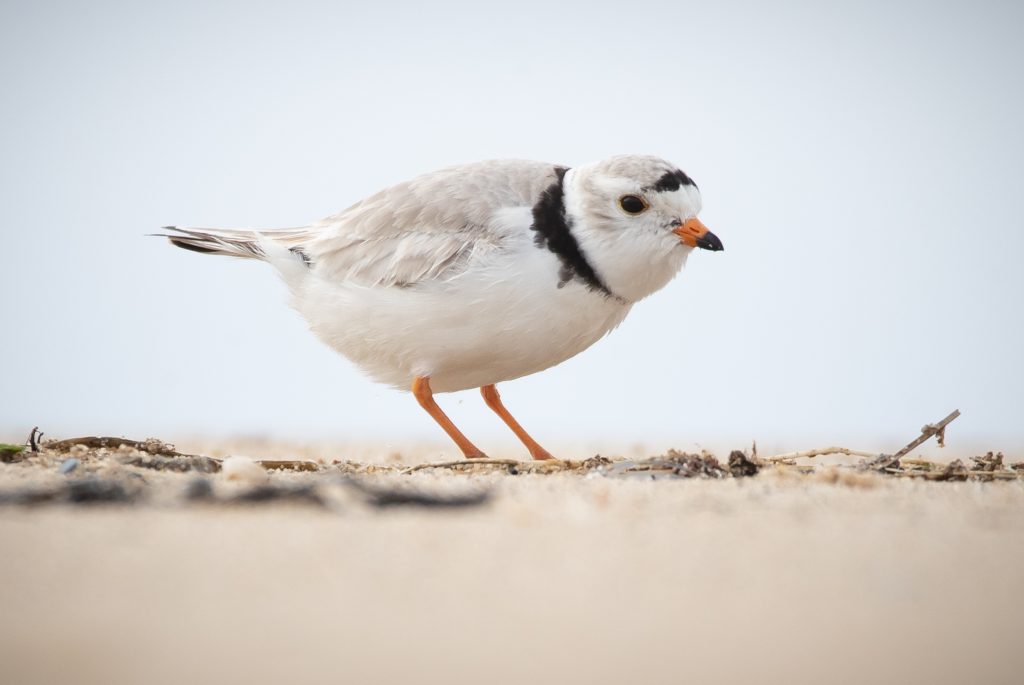
The Piping Plover and the Health of Georgica Pond
Each spring, a familiar but often unseen visitor returns to the shores of Georgica Pond. The piping plover—a small, sand-colored shorebird—arrives quietly along the ocean beach, blending almost seamlessly into its surroundings. With its soft tones and delicate movements, it is easy to overlook. But its presence carries meaning far beyond its size.
For those who know where to look, the piping plover is not just a seasonal resident. It is a signal—of resilience, of vulnerability, and of the overall health of this coastal ecosystem.
Living at the water’s edge
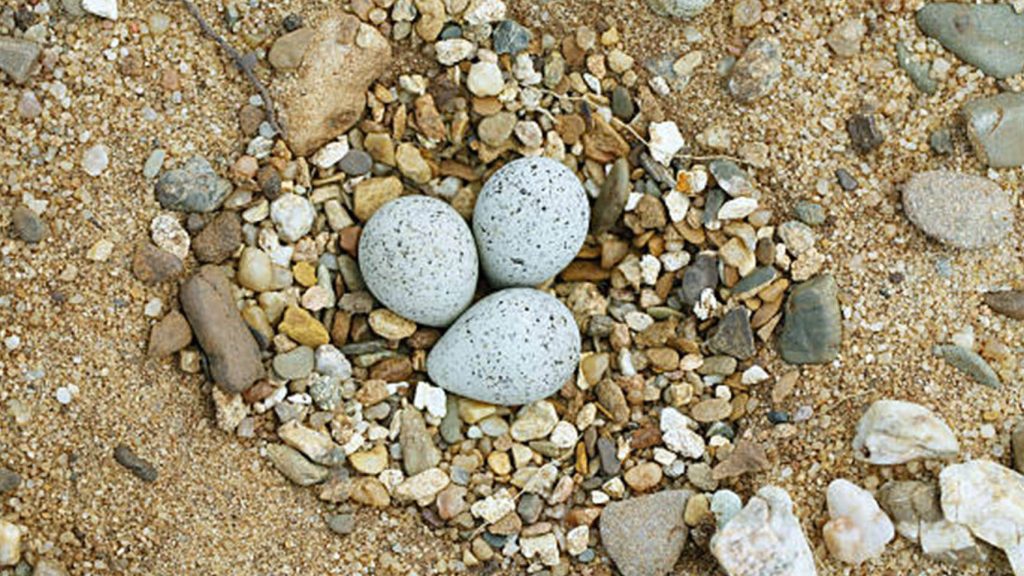
Piping plovers nest in one of the most exposed environments imaginable: open sand just above the high-tide line. Their nests are simple depressions in the beach, their eggs camouflaged among shells and pebbles. This natural strategy leaves them highly vulnerable in a modern landscape. Human activity along the shoreline—foot traffic, dogs, and recreational use—can unintentionally disturb nesting birds. Coastal development has reduced the open, undisturbed habitat they depend on. Increasingly frequent storms and rising sea levels add further pressure, sometimes washing away nests entirely. Because of these combined threats, piping plovers are listed as endangered in New York State and federally threatened along the Atlantic Coast.
Why the piping plover matters
Despite its small size, the piping plover plays an important role in understanding the health of places like Georgica Pond.
It is considered an indicator species—one whose presence reflects the condition of the broader environment. Where plovers are able to nest and successfully raise young, the surrounding ecosystem is generally functioning well.
Healthy beaches support the invertebrates plovers feed on, stable shorelines provide nesting habitat, and balanced ecological conditions allow these birds to complete their life cycle. In this way, the piping plover offers a window into the larger system. Its success—or struggle—mirrors the health of the shoreline itself.
Georgica Pond’s unique role
Georgica Pond is part of a dynamic coastal system where freshwater, tidal flows, and ocean processes intersect. This creates a diverse and productive environment that supports a wide range of wildlife.
For piping plovers, the area offers both nesting habitat along the ocean beach and access to feeding grounds in the adjacent tidal areas. This combination makes it a particularly valuable location during the breeding season.
The presence of plovers here underscores the ecological importance of maintaining the natural balance of the pond and its surrounding shoreline.
A broader effort to protect coastal habitat
Across East Hampton, the protection of piping plovers is led by the Town’s Natural Resources Department in coordination with state and federal agencies. Seasonal fencing, monitoring, and public education help reduce disturbances and improve nesting success.
These efforts reflect a broader understanding: protecting a single species often requires protecting an entire habitat.
The connection to Friends of Georgica Pond
Friends of Georgica Pond is dedicated to preserving and restoring the health of the pond and its watershed. While the organization does not directly manage piping plovers, its work contributes to the conditions that support a thriving coastal ecosystem.
Water quality, habitat integrity, and responsible stewardship all play a role in sustaining the interconnected systems that species like the piping plover depend on.
The presence of these birds at Georgica Pond is one visible expression of that larger ecological story.
A quiet measure of success
The piping plover does not announce itself. It does not draw attention.
But its return each spring—and its ability to persist in a heavily used and ever-changing landscape—offers a quiet measure of environmental health.
At Georgica Pond, that presence reflects something essential: that this is still a place where natural systems endure, where wildlife can find refuge, and where careful stewardship continues to matter.