Georgica Pond is unlike many coastal ponds along Long Island’s South Fork. For most of the year, it remains naturally closed off from the Atlantic Ocean by a barrier beach. Only twice annually do the East Hampton Town Trustees open the pond to the ocean to manage water levels and ecological balance.
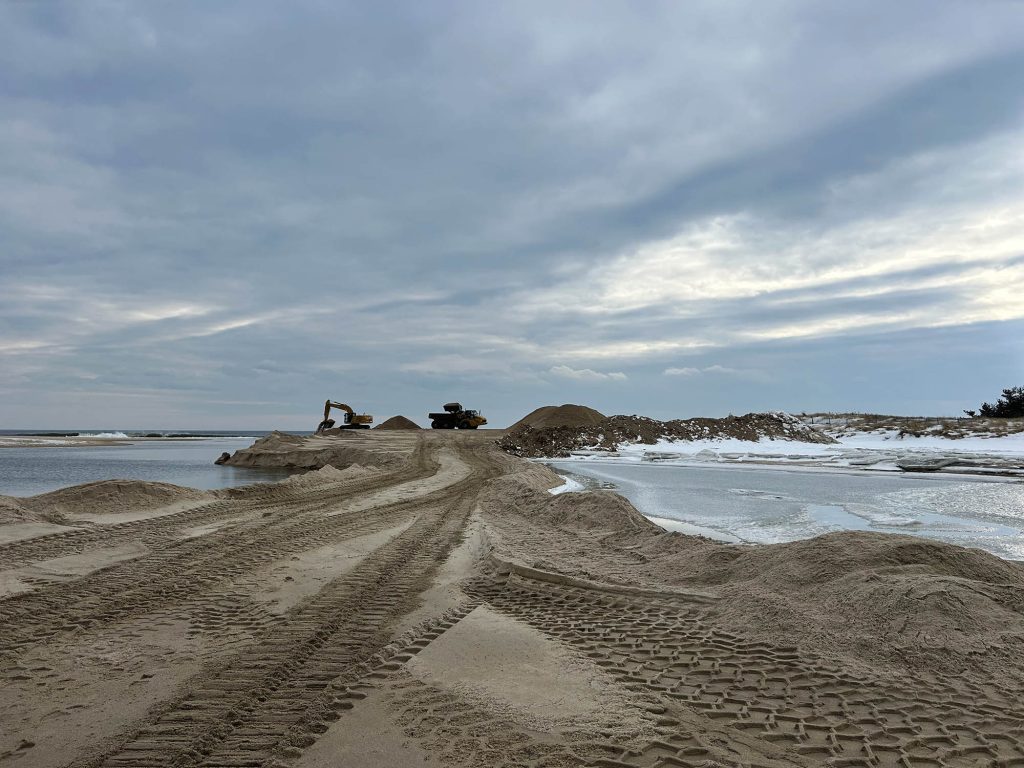
In addition to these seasonal openings, the Trustees conduct annual dredging at the base of the pond — a critical but often overlooked environmental management practice that supports the long-term health of this fragile ecosystem.
While dredging may appear mechanical or disruptive at first glance, its purpose is deeply ecological.
Managing Sediment and Preserving Depth
Over time, sediment from stormwater runoff, erosion, and organic matter accumulates at the bottom of Georgica Pond. Leaves, algae, soil particles, and nutrient-laden material settle and gradually reduce water depth.
This buildup has consequences. Shallower water warms more quickly in summer months, creating ideal conditions for harmful algal blooms. Reduced depth also limits habitat for fish and other aquatic species that depend on cooler, oxygen-rich water.
Annual dredging removes accumulated sediment, helping restore depth and improve overall water circulation within the pond. Deeper water remains cooler, holds more dissolved oxygen, and supports a healthier aquatic environment.
Reducing Nutrient Recycling
One of the most significant environmental benefits of dredging is its impact on nutrient dynamics.
Georgica Pond receives nitrogen and other nutrients from its watershed — primarily through stormwater runoff and groundwater inputs. When these nutrients settle into bottom sediments, they do not simply disappear. During warm weather or low-oxygen conditions, nutrients stored in the sediment can be released back into the water column, fueling algal blooms.
By removing nutrient-rich sediment from the base of the pond, dredging reduces this internal nutrient recycling. This lowers the risk of excessive algae growth, improves water clarity, and helps stabilize oxygen levels.
In a pond that remains closed most of the year, this internal nutrient management becomes especially important, since tidal flushing is limited.
Protecting Aquatic Life
Healthy sediment balance and water depth directly affect fish, shellfish, and bird populations.
Low oxygen events — often linked to warm temperatures and excess nutrients — can stress or kill fish. Dredging helps maintain conditions that reduce these risks. Improved water clarity also supports submerged aquatic vegetation, which provides habitat and food for a wide range of species.
When the Trustees open the pond to the ocean, improved depth and water quality enhance the ecological benefits of that exchange. Together, seasonal openings and annual dredging work in tandem to support biodiversity.
Supporting Flood Management and Shoreline Stability
Sediment accumulation can also affect water levels and flood dynamics. Reduced capacity within the pond means heavy rainfall can lead to higher water elevations, increasing pressure on surrounding wetlands and properties.
By maintaining depth and volume, dredging improves the pond’s ability to absorb stormwater and respond to major rain events. This benefits both natural habitats and nearby homeowners.
Healthy wetlands surrounding the pond depend on balanced water levels. Protecting those wetlands preserves natural filtration, wildlife habitat, and coastal resilience.
A Deliberate Stewardship Strategy
Georgica Pond exists at the intersection of natural processes and human influence. Development within the watershed has increased nutrient inputs over time, making active management more important.
Annual dredging at the base of the pond is not an attempt to reshape nature, but rather a measured effort to counteract sediment and nutrient accumulation that can degrade water quality. Combined with periodic openings to the ocean, it forms part of a broader stewardship strategy designed to preserve one of East Hampton’s most important natural resources.
Maintaining Georgica Pond requires vigilance and science-based management. Dredging is one of the key tools that helps ensure the pond remains ecologically vibrant for generations to come.
As this year’s dredging effort comes to a close, we want to recognize and thank the East Hampton Town Trustees for their continued stewardship of Georgica Pond. The Trustees are expected to complete this year’s dredging project by Wednesday, April 1st. Their commitment to this important work plays a vital role in protecting the pond’s ecological health and ensuring its resilience for years to come.